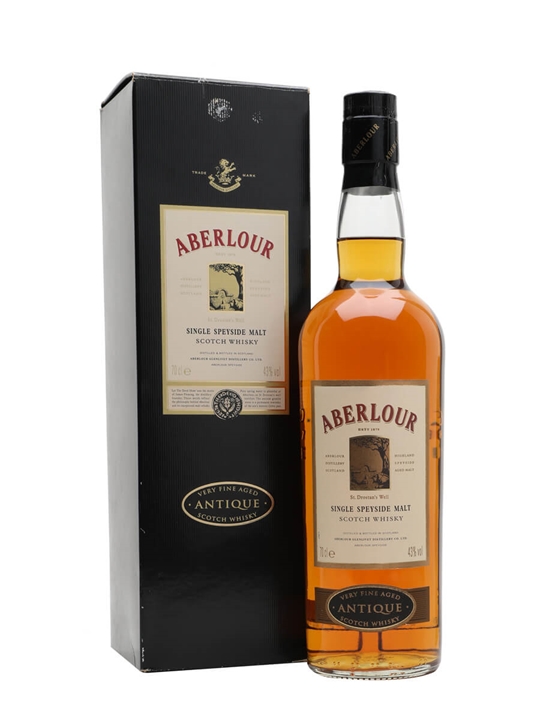

There are bottles that sit quietly on the shelf and speak volumes before you've even drawn the cork. The Aberlour Antique, bottled sometime in the 1990s and carrying a quarter-century of age, is precisely that sort of whisky. It arrived on my desk without fanfare — no elaborate packaging, no breathless marketing copy — just a handsome bottle with the weight of twenty-five years behind it.
Speyside has always been the heartland of approachable, fruit-forward single malt, and a 25-year-old expression from this region bottled at 43% ABV tells you a good deal before you nose it. This is a whisky that has had serious time in wood. At that age, the spirit and the cask have long since stopped negotiating and reached a settlement. The 'Antique' designation and 1990s bottling date place this firmly in an era when distilleries were less concerned with limited editions and more focused on putting good whisky into good bottles at sensible strength.
What to Expect
A 25-year-old Speyside single malt at 43% is not going to shout at you. This is a whisky that has had a generation to soften, to integrate, to become something greater than the sum of its parts. The Speyside character — that trademark orchard fruit and gentle malt sweetness — will have deepened considerably over two and a half decades. Expect dried fruits to have overtaken fresh ones, expect oak influence to be pronounced but, at this age from a reputable bottling, hopefully well-managed rather than dominant.
The 43% ABV is worth noting. This was standard bottling strength for the era, and while modern enthusiasts might wish for cask strength, there is something to be said for a whisky that has been carefully reduced to a drinking strength that the blender or distillery manager deemed correct. It suggests a confidence in the liquid — no need to hide behind high proof.
The Verdict
At £175, you are paying for genuine age and genuine provenance. In today's market, where 25-year-old single malts from respected Speyside producers routinely command three or four times that figure, this represents rather remarkable value — assuming, of course, you can find one. These 1990s bottlings are becoming increasingly scarce, and rightly sought after by collectors and drinkers alike.
I score this 8.4 out of 10. That reflects a whisky that delivers on its promise: real age, honest Speyside character, and the sort of quiet authority that only comes from extended maturation. It loses half a point for the 43% strength — I'd have liked to taste what this spirit could do at 46% or above — but that is a minor quibble with a bottling philosophy of its time, not a flaw in the whisky itself. This is a serious dram from a serious region, and it deserves serious attention.
Best Served
Neat, in a proper Glencairn, at room temperature. If you must, a few drops of still water — no more — to open things up. A whisky of this age and pedigree has spent twenty-five years developing complexity; the least you can do is give it the glass and the patience it has earned. A Highball would be a waste. This one is for sitting with.