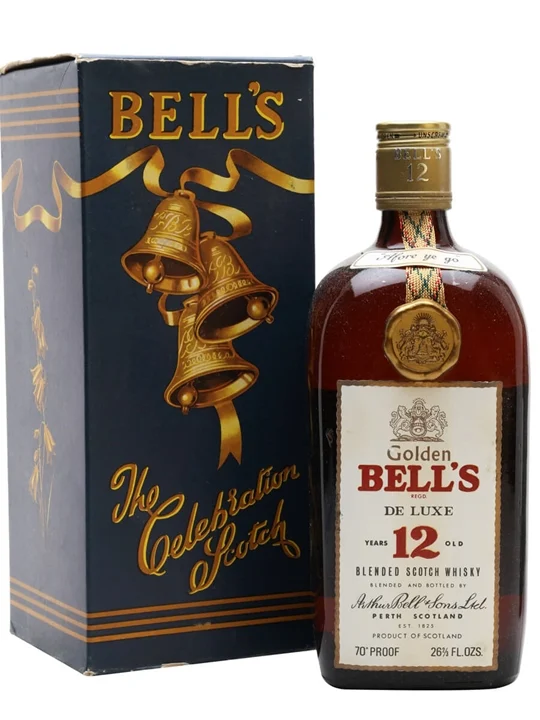

There's a particular thrill in handling a bottle that predates your career in whisky by a comfortable margin. Bell's 12 Year Old, bottled sometime in the 1970s, belongs to an era when blended Scotch wasn't fighting for shelf space against single malts — it was Scotch, full stop. Arthur Bell & Sons were at the peak of their powers, and their 12 Year Old represented the prestige end of a range that dominated the UK market. At £199 for a piece of that history, you're paying as much for context as you are for liquid.
Let me be clear about what this is. Bell's in the 1970s was a blend built on Blair Atholl and Dufftown malts, with Inchgower playing a supporting role — serious single malts that today command respect on their own. The 12 Year Old sat above the standard blend as Bell's statement of quality, a whisky designed to show what careful vatting and a decent age statement could achieve. This was before Guinness acquired the company, before Diageo swallowed the lot, before the 12 Year Old was quietly discontinued in favour of the 8 Year Old that most people now associate with the brand. In other words, this bottle is from the good old days, and I mean that without a shred of irony.
At 40% ABV, you're looking at the standard bottling strength of the period. Nothing cask strength, nothing experimental — just honest blended Scotch made when the category still commanded genuine respect from drinkers and blenders alike. The 12-year age statement guaranteed that every component in the vatting had spent a proper stretch in wood, something that gave these older Bell's bottlings a depth and composure that the modern expressions simply can't match.
What to Expect
Without cracking this particular bottle open for a full tasting breakdown, I can tell you what the style promises. 1970s Bell's 12 was known for a rounded, malt-forward character with a gentle sweetness — think dried fruit, a touch of honey, and that distinctive waxy quality that well-aged Speyside and Highland malts contributed. The grain component in blends of this era tended to be softer and more characterful than what you'll find in modern equivalents. Time in the bottle will have mellowed things further, potentially adding subtle oxidative notes that collectors find fascinating.
The Verdict
I'm giving this an 8.1 out of 10. That's a strong score, and here's why: this isn't just a bottle of whisky, it's a benchmark. It shows you what blended Scotch was capable of when the category was taken seriously at every level of production. The 12-year age statement, the quality of the component malts, the care in the blending — all of it reflects a period when Bell's was the best-selling whisky in Scotland for good reason. The £199 price tag is fair for a sealed 1970s bottle with an age statement. You'll pay more for younger, less interesting whiskies from fashionable distilleries. This has provenance, character, and the weight of history behind it.
Best Served
If you do open it — and I think whisky is for drinking, not just displaying — pour it neat in a tulip glass at room temperature. Give it ten minutes to breathe. A bottle this old deserves patience. If you find it needs a touch of water, add just a few drops. But I'd wager the decades of bottle ageing have already done the work for you. This is a whisky for a quiet evening when you want to taste what the industry used to be.