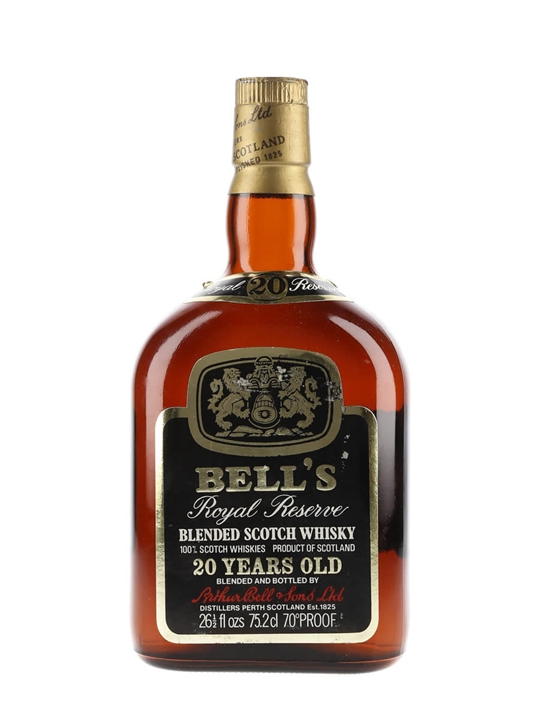

There's a particular kind of thrill in holding a bottle that predates your career. Bell's Royal Reserve 20 Year Old, bottled sometime in the 1970s, is one of those objects that makes you reconsider everything you thought you knew about blended Scotch. We live in an era where single malts command the column inches and the auction prices, but this bottle is a quiet, firm reminder that blending was once considered the higher art — and Arthur Bell & Sons were among its finest practitioners.
Let me put this in context. In the 1970s, Bell's was the bestselling whisky in Scotland itself — not just an export brand, but the dram Scots actually chose to drink. The Royal Reserve sat at the top of their range, a 20-year-old blend assembled when the company still had direct access to Blair Athol and Dufftown single malts as their core signatures, along with a network of grain and malt supply that modern blenders would weep over. At 40% ABV, it's bottled to the standard of its time, but don't let that fool you into thinking this is thin or simple. Twenty years of maturation in that era, with the cask stock available then, produced something fundamentally different from what you'd find today.
What you're buying here is a piece of Scotch whisky history at a price that, frankly, undersells it. At £225, you're paying less per year of age than most contemporary single malts half this age would cost you. The blended Scotch market has a bizarre pricing inefficiency: collectors chase single malts from the same decade for four figures, while blends of equal age and often superior drinkability sit quietly on shelves waiting for someone with sense.
Tasting Notes
I won't fabricate specific notes for a bottle where individual experiences will vary depending on storage history and fill level. What I will say is this: a well-stored 20-year-old blend from the 1970s should deliver the kind of integrated, polished complexity that was the entire point of the blender's craft. Expect weight and depth that belies the 40% strength. These older blends frequently show a seamlessness — malt and grain working together rather than competing — that modern releases rarely achieve. If you're lucky enough to open one in good condition, you'll understand why Scotland's master blenders were once the most respected figures in the industry.
The Verdict
I'm giving Bell's Royal Reserve 20 Year Old an 8.5 out of 10, and I'd argue that's conservative. This is a bottle that rewards anyone willing to look past the current single malt orthodoxy. The age, the provenance, and the era of production all point to something genuinely special. It's not a museum piece to be hoarded — it's a whisky that was made to be drunk, by people who knew exactly what they were doing. The fact that the broader market still undervalues vintage blends like this is, honestly, good news for the rest of us.
Best Served
Neat, in a tulip glass, at room temperature. Give it fifteen minutes after pouring before you commit to any judgements — a whisky that's spent fifty-odd years in glass has earned your patience. If you're feeling exploratory, a few drops of water may open things up, but start without. This is not a whisky for cocktails or highballs. It's a sit-down, pay-attention dram. A Tuesday evening with nothing on the calendar and nowhere to be.