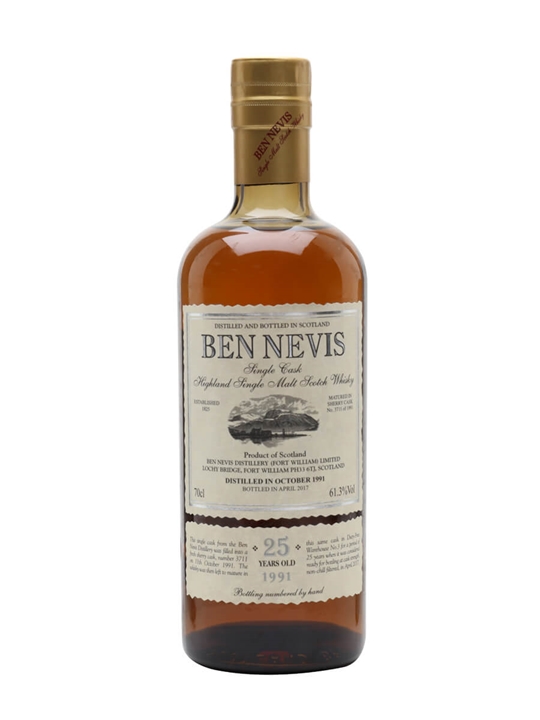

A 1991 vintage from Ben Nevis, bottled at 25 years old and a commanding 61.3% ABV — this is cask strength Highland single malt that demands your attention. Ben Nevis sits at the foot of Britain's highest peak in Fort William, one of the western Highlands' oldest licensed distilleries, and bottles from the early 1990s have developed a serious following among independent bottling collectors. At a thousand pounds, you're paying for quarter-century maturation and the privilege of tasting whisky from an era when Ben Nevis was producing some genuinely distinctive spirit.
I should be clear: this is not a gentle dram. At 61.3%, it arrives with real authority. The cask strength bottling means nothing has been diluted or chill-filtered to smooth the edges — what you're getting is the whisky as it sat in the cask for twenty-five years, concentrated and uncompromising. That's precisely the point. A whisky of this age and strength carries the full weight of its maturation, and for those willing to spend time with it, the rewards are considerable.
The 1991 vintage places this distillation in an interesting period for Ben Nevis. Production character from this era tends toward the waxy, slightly tropical profile that has made older Ben Nevis releases increasingly sought after by serious collectors and auction buyers. At 25 years, you'd expect significant oak influence balanced against whatever fruit and malt character survived that long conversation with wood. The cask strength presentation preserves nuances that would vanish at 40% or 43%.
The Verdict
I've given this an 8.5 out of 10 — a score I don't hand out lightly. What earns it that mark is the combination of genuine age, cask strength integrity, and the reputation that Ben Nevis spirit from this vintage has built over the past decade. This is a whisky that rewards patience. It opens up dramatically over thirty minutes in the glass, and adding water unlocks layers that the raw strength initially holds back. At £1,000, it sits in serious territory, but for a 25-year-old cask strength single malt from a distillery with limited independent releases at this age, it represents what I'd call fair value in today's market — not a bargain, but not inflated either.
This is a collector's whisky, certainly, but it would be a shame to leave it sealed. It was made to be drunk. If you're fortunate enough to own a bottle, open it. Share it with someone who understands what they're tasting. That's what whisky at this level is for.
Best Served
Pour 25ml neat into a Glencairn and let it sit for ten minutes — at 61.3%, it genuinely needs the time. Then add water, a few drops at a time, until the alcohol heat softens and the spirit starts to speak clearly. I'd suggest working down to roughly 50% strength, which for this pour means perhaps a teaspoon of water. Don't rush it. A whisky that spent 25 years in oak deserves twenty minutes of your evening. No ice, no mixers — this is a contemplative dram, best enjoyed after dinner with nothing competing for your attention.