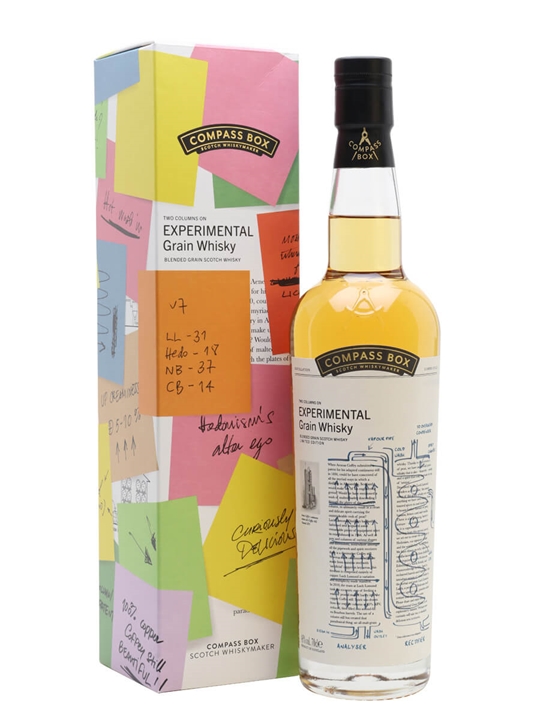

Compass Box has built a reputation for doing things differently, and the Experimental Grain is one of those bottles that makes you pay attention. This is a blended grain Scotch whisky — not a blend in the traditional sense, but a marriage of grain whiskies from different Scottish distilleries, bottled at a healthy 46% ABV with no age statement. At £59.95, it sits in that interesting middle ground where you're paying for craft and curation rather than a number on the label.
For anyone unfamiliar with grain whisky, here's the short version: most Scotch blends rely on grain whisky as the backbone, the quiet workhorse behind the showier malt component. What Compass Box does with Experimental Grain is pull that backbone out front and let it speak for itself. Grain whisky distilled in column stills tends to be lighter, sweeter, and more approachable than pot-still malt. It picks up vanilla and toffee notes from the cask more readily, and when you blend several grain whiskies together — as founder John Glaser does here — you get layers of texture that a single grain on its own rarely achieves.
The 46% bottling strength is a smart choice. It's enough to carry weight and complexity without the need for water, but it won't scare off someone who normally drinks at 40%. There's no chill filtration here either, which means you're getting the full range of flavour compounds and oils that the distillation and maturation produced. These details matter, and Compass Box has always been transparent about them — sometimes to the point of getting into legal disputes with the Scotch Whisky Association over labelling. That willingness to push boundaries is exactly what makes this bottle interesting.
Tasting Notes
I don't have formal tasting notes broken down for this one, but I can tell you what to expect from the style. Blended grain Scotch at this strength and quality level will lean towards creamy, cereal-forward flavours — think buttered toast, soft vanilla, maybe some coconut from the oak. It's the kind of whisky that rewards patience. Give it ten minutes in the glass and it opens up considerably. If you're used to drinking single malts with heavy peat or sherry influence, this will feel like a different world entirely, and that's the point.
The Verdict
At 7.6 out of 10, the Experimental Grain earns its score by doing something genuinely different and doing it well. This isn't a whisky that's trying to compete with your favourite Speyside or Islay malt — it's asking you to reconsider what grain whisky can be when someone pays proper attention to it. The price is fair for what you're getting: a non-chill-filtered, 46% bottling from one of the most thoughtful blenders in Scotland. It's not going to blow your head off with intensity, but not everything needs to. Sometimes the quiet ones are worth listening to.
Best Served
This is a natural fit for a Whiskey Sour. The grain whisky's inherent sweetness and creamy texture play brilliantly against fresh lemon juice and a touch of simple syrup. Shake it hard with egg white for that silky foam, and you've got a cocktail that's more interesting than the sum of its parts. If you prefer it neat, use a Glencairn and give it time — room temperature, no ice. The oils and lighter aromatics need warmth to show themselves properly.