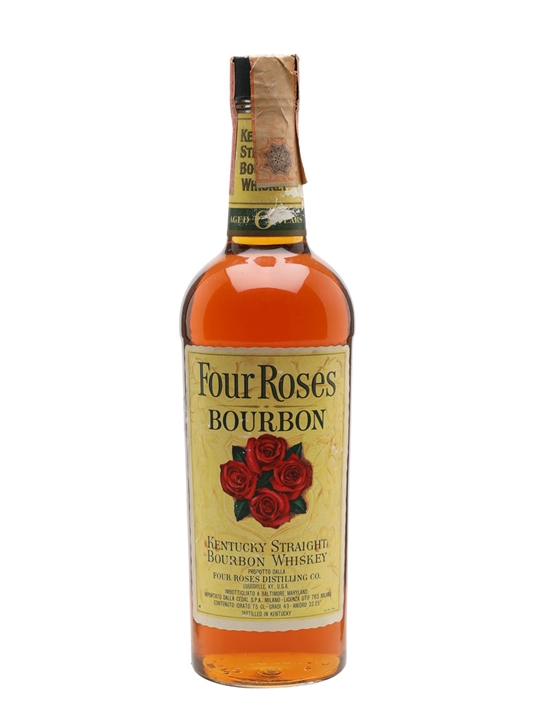

There are bottles you buy to drink, and there are bottles you buy because they represent a moment in time. The Four Roses Yellow Label 6 Year Old from the 1970s sits firmly in the latter category — though I'd argue it deserves to be experienced, not simply admired from a shelf. At £325, this is not an everyday purchase, but for collectors and serious whisky enthusiasts, it offers something increasingly rare: a genuine taste of how American whiskey was made half a century ago.
Four Roses has long been one of the more distinctive names in American whiskey, and this 1970s bottling of their Yellow Label at six years old and 43% ABV captures the brand at a fascinating point in its history. The Yellow Label was, and remains, the gateway expression — but a gateway bottling from fifty years ago tells a very different story than its modern counterpart. Production methods, grain sourcing, warehousing conditions, and even the water itself would have contributed to a profile that simply cannot be replicated today. That alone makes this bottle worth serious consideration.
At six years old, this was never intended to be a deeply aged, contemplative whisky. It was built for accessibility, for reliability, for the kind of consistent quality that kept Four Roses on back bars across the United States and beyond. But time has a way of rewriting the script. What was once an approachable everyday pour has become, through scarcity and the passing of decades, something altogether more interesting.
Tasting Notes
I won't fabricate specific tasting notes where I lack detailed records — this is a bottle where the experience speaks for itself when poured. What I will say is that 1970s American whiskey at 43% ABV typically rewards patience. Give it air. Let it open. Bottles of this era often reveal character that modern, more tightly controlled production simply doesn't produce. Expect the unexpected.
The Verdict
I'm giving this a 7.9 out of 10, and I want to be clear about why. The score reflects genuine quality and the undeniable appeal of owning and tasting a piece of whiskey history. The 43% strength is encouraging — it suggests this was bottled with enough conviction to let the spirit do the talking. The six-year age statement, modest by today's marketing standards, was perfectly honest for its time, and frankly, I wish more producers today had that same integrity. Where I hold back slightly is on the price-to-age ratio; £325 is a fair market price for a 1970s bottle in good condition, but it's a premium driven by rarity and collectibility rather than cask maturation alone. For the right buyer — someone who values provenance and history alongside flavour — this is a worthy investment. For someone purely chasing depth and complexity per pound spent, there may be stronger plays elsewhere.
Best Served
Neat, at room temperature, in a tulip-shaped glass. A bottle like this deserves your full attention — no ice, no mixer. If you find it tight on first pour, add no more than a few drops of still water and let it sit for five minutes. You're not just tasting whisky here; you're tasting 1970s Kentucky through a glass, and that deserves respect.