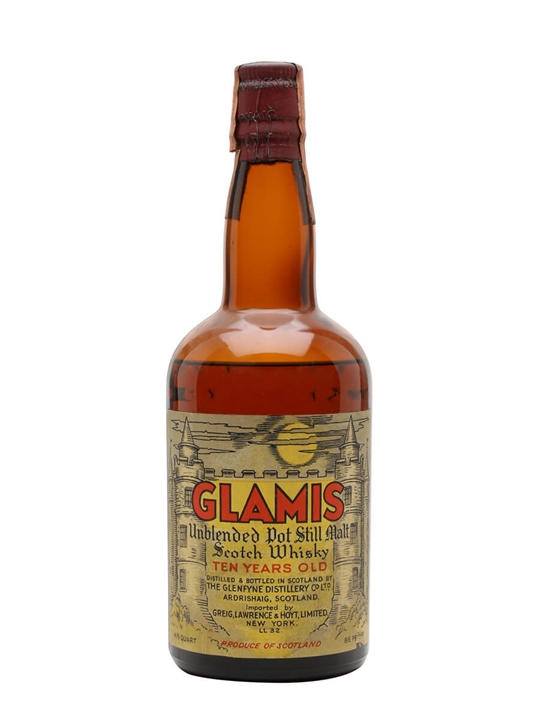

There are bottles you buy to drink, and there are bottles you buy because they represent something irreplaceable. The Glamis 10 Year Old from Glenfyne Distillery, bottled sometime in the 1930s, falls squarely into the latter category — though I suspect whoever first laid this down intended it purely for enjoyment. That it has survived nearly a century intact is remarkable in itself.
Glenfyne is a name that will draw a blank from most whisky drinkers, and understandably so. This is not a distillery you can visit. It is not producing spirit today. What remains are bottles like this one — artefacts from an era when Highland single malt was bottled with far less fanfare and far more regularity than collectors might imagine. The label reads simply, without the marketing language we have grown accustomed to. Ten years old, 43% ABV, Highland whisky. That directness is part of the appeal.
At £7,500, this is squarely a collector's bottle, and the price reflects its scarcity rather than any promise of what the liquid might deliver after nine decades in glass. Whether the whisky inside has held its character is a question only the buyer can answer — and that uncertainty is, frankly, part of what makes bottles from this period so fascinating. You are not simply purchasing whisky. You are purchasing a moment in Scottish distilling history, sealed and preserved.
What to Expect
A ten-year-old Highland single malt from this era would have been distilled and matured under conditions quite different from today's standards. Smaller stills, worm tub condensers in many cases, and cask management driven more by practicality than flavour profiling. The result, in bottles from comparable distilleries and vintages that I have been fortunate enough to taste, tends toward a robust, malty character — less polished than modern single malts, but with a directness and weight that many contemporary expressions have moved away from. At 43%, this was bottled at a strength that suggests confidence in the spirit's ability to carry itself without cask-strength theatrics.
I should be transparent: without opening this particular bottle, I cannot speak to its current condition. Glass storage over decades can preserve beautifully or, in less ideal conditions, allow slow deterioration. The fill level and storage history matter enormously with bottles of this age.
The Verdict
I give the Glamis 10 Year Old a rating of 8.2 out of 10, and that score reflects the complete picture — the historical significance, the rarity, and the reasonable expectation of quality based on its provenance and stated specifications. This is a piece of whisky history from a distillery that no longer exists, bottled at a respectable strength during a period when Highland single malt was made with a straightforwardness that I genuinely admire. For the serious collector or the historian of Scotch whisky, this bottle needs no justification. It speaks for itself, quietly and without embellishment, much like the era it comes from.
Best Served
If you do choose to open this bottle — and I would not blame you either way — serve it neat in a tulip glass at room temperature. Give it time. A whisky that has waited this long deserves your patience. No water, no ice. Just attention.