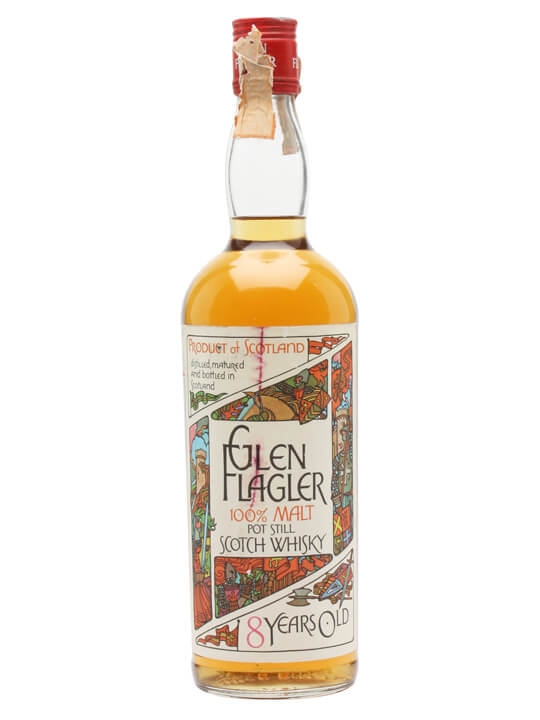

There are bottles you drink and bottles you sit with. Glen Flagler 8 Year Old, a Lowland single malt bottled sometime in the 1970s, belongs firmly in the latter category. This is a whisky from a distillery that no longer exists — one of those quiet casualties of Scotland's consolidation years — and every remaining bottle carries the weight of that absence. At £1,000, you are not simply buying a dram. You are buying a piece of Scotch whisky's disappearing history.
The Lowlands have long been the overlooked chapter of Scottish whisky. While Islay and Speyside command the headlines, the Lowland tradition — lighter, gentler, built on elegance rather than force — has always appealed to those of us who believe subtlety is not the same as simplicity. Glen Flagler was bottled at 40% ABV, the standard of its era, and carries an 8-year age statement. By today's standards that may seem young, but distilling practices of the period often produced spirits that matured differently. Eight years in wood during the 1970s tells a different story to eight years in wood today.
The distillery behind this bottling remains a matter of some debate among collectors and historians, and I will not pretend to settle that question here. What I can say is that Glen Flagler has become one of those names that surfaces at auction with increasing rarity and increasing reverence. Bottles from closed distilleries occupy a unique space: they are finite. Once they are gone, they are gone entirely. No revival, no relaunch, no limited-edition callback. Just silence.
Tasting Notes
I will be honest with you — detailed tasting notes for a bottle this scarce and this old deserve to come from a fresh opening, not from memory or hearsay. What I can speak to is the Lowland character this whisky was built on: expect a profile that leans toward cereal sweetness, gentle floral touches, and a lightness of body that rewards patience rather than demanding attention. This is a whisky that invites you to slow down.
The Verdict
I have given Glen Flagler 8 Year Old a rating of 8.1 out of 10. That score reflects both what is in the glass and what is behind it. As a Lowland single malt from a lost distillery, bottled over half a century ago, this is genuinely rare stock. The price — £1,000 — is significant, but it sits within the range I would expect for a ghost distillery bottling of this vintage. You are paying for scarcity, for provenance, and for the privilege of tasting something that will never be made again. For the collector, this is a sound acquisition. For the drinker who understands what they are opening, it is a small event.
Best Served
Neat, at room temperature, in a tulip-shaped nosing glass. If you have come this far — sought out a bottle, paid the premium, committed to opening it — do not rush the experience. Give it ten minutes in the glass before your first sip. A few drops of soft water may open things up, but I would taste it unadorned first. This is not a whisky for cocktails or ice. It is a whisky for a quiet evening and your full attention.