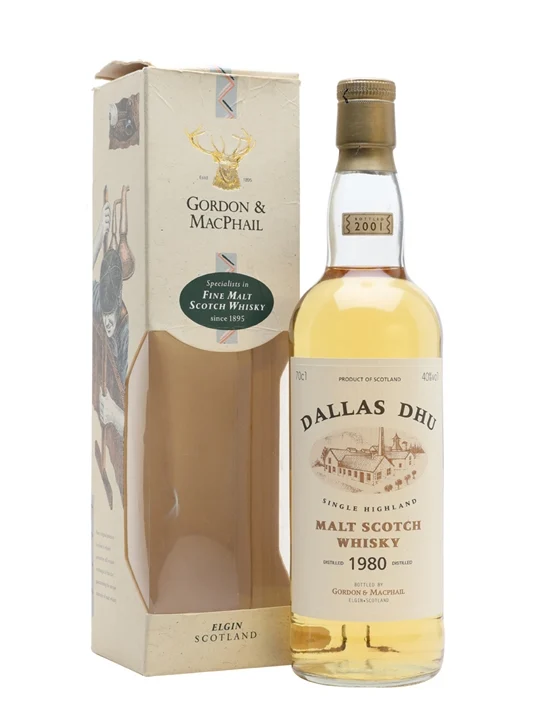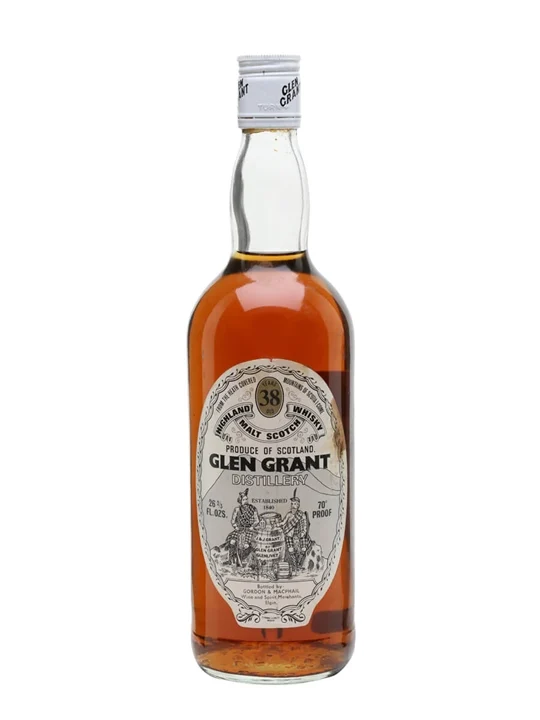

There are bottles that sit on a shelf and quietly demand your attention — not through flash or marketing bluster, but through sheer weight of time. The Glen Grant 38 Year Old, bottled sometime in the 1970s by Gordon & MacPhail, is precisely that kind of whisky. When a bottle like this crosses my desk, I approach it with a certain reverence. Thirty-eight years in oak is an extraordinary commitment, and the fact that Gordon & MacPhail saw fit to select and release this cask speaks to its quality. This is old Speyside at its most serious.
Gordon & MacPhail's reputation as independent bottlers is, frankly, unimpeachable. For well over a century, the Elgin firm has been selecting, maturing, and releasing casks from Scotland's finest distilleries, often holding stock far longer than the distilleries themselves would dare. Their relationship with Glen Grant is particularly well documented, and their bottlings from this era — the 1970s releases — are considered benchmarks by collectors and serious drinkers alike. At 40% ABV, this was bottled at what was then standard strength, a practice that, while less fashionable now, often produced whiskies of remarkable elegance and balance.
What to Expect
A Speyside single malt of this age, bottled in this period, occupies a very specific place in the whisky landscape. Glen Grant has long been known for producing a lighter, more delicate spirit — a house style that lends itself beautifully to extended maturation. Where heavier, more robust malts can become overly tannic or woody after decades in cask, a lighter Speyside distillate often finds a graceful equilibrium. At 38 years, you should expect the kind of depth and complexity that only prolonged interaction between spirit and oak can produce. The wood influence will be significant but, in the best examples, integrated rather than dominant. This is a whisky that rewards patience — in its making and in its drinking.
The 1970s bottling date places this squarely in an era before the whisky boom, before chill-filtration became standard practice at many bottlers, and before the global market reshaped how Scotch was produced and presented. For those of us who have spent years tasting across decades of production, bottles from this period carry a particular character that is increasingly difficult to find.
The Verdict
At £2,000, this is not a casual purchase — but nor is it an unreasonable ask for a whisky of this age and provenance. Comparable Gordon & MacPhail bottlings from this era regularly command similar figures at auction, and many have climbed well beyond. I would rate this 8.5 out of 10. The pedigree is right: a respected Speyside distillery, an elite independent bottler, and nearly four decades of maturation. What holds me back from a higher mark is simply the 40% ABV — I often find that whiskies of this calibre show their full character at cask strength. That said, the bottling strength was standard for the time, and Gordon & MacPhail's track record suggests they would not have released a cask that did not perform beautifully at this proof.
This is a bottle for collectors, certainly, but I would urge anyone fortunate enough to own one not to let it become merely decorative. Whisky this old was made to be drunk.
Best Served
Neat, and at room temperature. Pour it and leave it in the glass for ten minutes before your first sip — a whisky that has spent 38 years in oak has earned the right to open up on its own terms. A few drops of still water may coax out further nuance, but add them cautiously. There is no place for ice here. This is a contemplative dram, best enjoyed in quiet company or none at all.