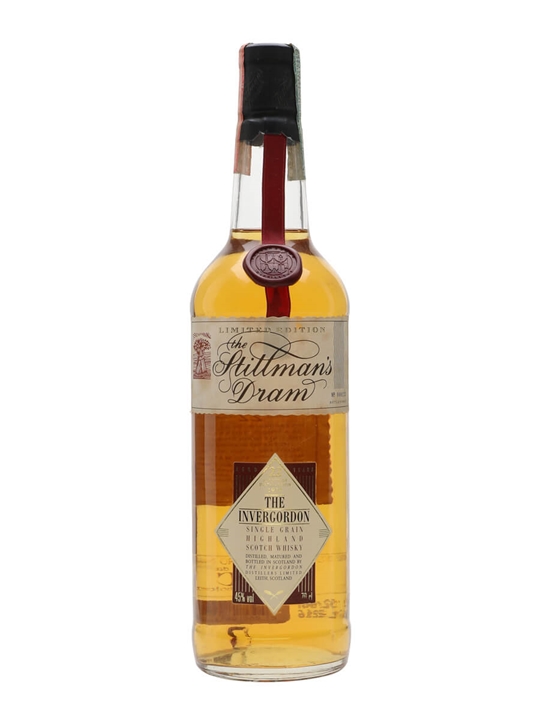

There's a particular thrill in finding a single grain whisky that actually commands attention. Too often, grain whisky gets treated as blending fodder — the quiet workhorse behind your favourite Scotch blend, never quite trusted to stand on its own. The Invergordon 1970, bottled at 22 years old as part of the Stillman's Dram range, is a direct challenge to that lazy thinking. At 45% ABV, it's been given enough muscle to speak clearly, and two decades in wood have given it plenty to say.
Invergordon is one of the Highlands' largest grain distilleries, and its output has underpinned countless blended Scotch brands for generations. But here's the thing about grain whisky aged this long — it stops behaving like a supporting act. Twenty-two years of maturation transforms column-still spirit into something genuinely complex. The lighter, sweeter character that grain is known for doesn't disappear; it just gains depth. Think of it as the difference between a quick sketch and a finished portrait. The raw material is accessible, even friendly, but time has added layers you wouldn't expect.
A 1970 vintage carries its own weight, too. This is whisky from an era before craft distilling was fashionable, before every bottling needed a story about hand-selected casks and artisanal this-or-that. It was made to be good, not to be interesting — and yet here we are, more than two decades later, finding it genuinely interesting regardless. The 45% bottling strength is a smart choice: enough to carry oak influence and texture without burning through the natural sweetness that makes aged grain so appealing.
What to Expect
Single grain whiskies of this age tend to deliver a profile built around toffee, vanilla, and gentle spice, with a creamy mouthfeel that's markedly different from malt whisky. The extended maturation here should push things toward dried fruit, baking spice, and a polished oak character. If you've only ever tasted grain whisky as a young blending component, this will recalibrate your expectations entirely. It's silk rather than burlap.
The Verdict
At £299, you're paying for scarcity and age — a 1970 vintage single grain at 22 years old isn't something you stumble across every day. Is it worth it? I'd argue yes. This sits in a category that the market has largely ignored until recently, and bottles like this are becoming harder to find as collectors catch on to what aged grain can offer. It's a genuinely rewarding dram that proves single grain whisky deserves far more respect than it typically receives. The combination of age, vintage character, and a sensible bottling strength makes this one I'd happily recommend. An 8.5 out of 10 — not because it's flawless, but because it does exactly what great aged grain should do, and does it with real confidence.
Best Served
Pour this neat in a Glencairn at room temperature and give it five minutes to open up. A few drops of water will coax out extra sweetness if you find the oak assertive, but honestly, at 45% it's already well-balanced. This is an after-dinner whisky — the kind you sit with once the plates have been cleared and the conversation has slowed down. Save the ice for something younger.