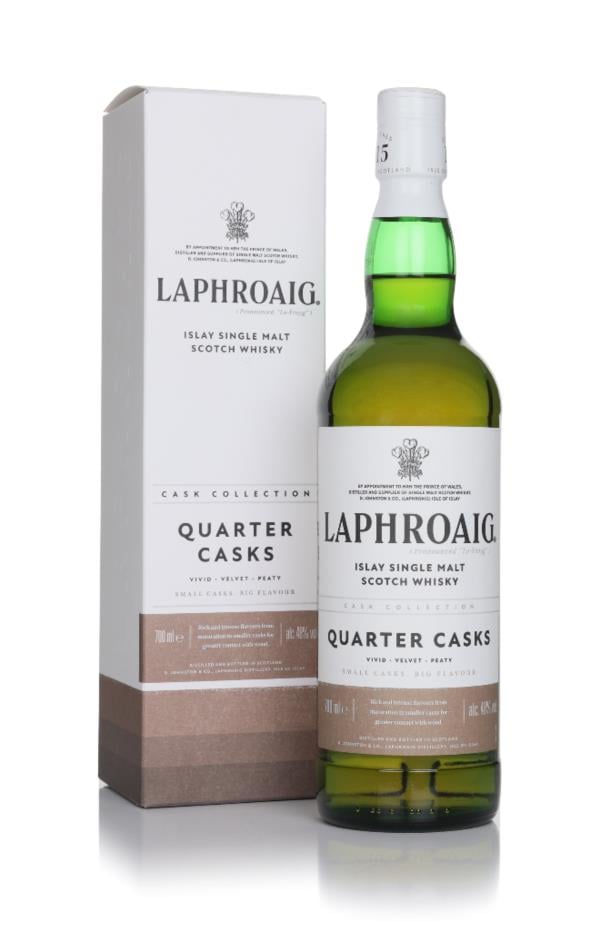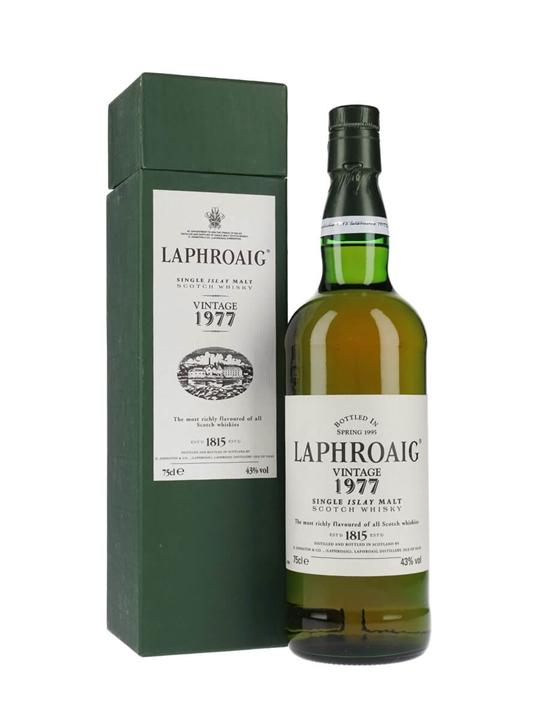

There are bottles you buy to drink, and there are bottles you buy because they represent a moment in time. This Laphroaig 1977, bottled in 1995, sits firmly in the latter category — though I'd argue it deserves both considerations. We're looking at spirit distilled nearly fifty years ago, given roughly eighteen years in cask before being bottled at a restrained 43% ABV. At £3,250, this is squarely collector territory, but it's not merely a shelf piece. This is old Laphroaig, and old Laphroaig is a different animal entirely.
What makes vintages from this era so sought after is context. The late 1970s represent a period before significant modernisation swept through Islay's distilleries. Production methods, barley sourcing, and maturation philosophies were markedly different. Spirit from this window tends to carry a density and coastal intensity that later bottlings, however excellent, rarely replicate in quite the same way. The 43% strength is typical of its era — this was standard bottling strength for many official and unofficial releases of the period, and while cask strength has become the fashionable expectation today, there's something to be said for spirit that's been allowed to settle at this proof. It often rewards with integration rather than raw power.
What to Expect
Without specific tasting notes to hand, I'll speak to what a bottle of this vintage and provenance generally promises. Laphroaig from the 1970s, given nearly two decades of maturation, typically presents a more refined, waxy character than its younger siblings. The medicinal peat that defines modern Laphroaig is often softened by time — still present, but wrapped in something richer and more complex. Expect old oak influence, a certain maritime salinity, and a depth that only genuine age can deliver. The 43% ABV means this won't assault the senses; it should unfold gradually, rewarding patience.
The Verdict
I'm giving this an 8.1 out of 10. That's a strong score, and here's why it earns it: provenance, rarity, and the simple fact that 1970s Islay single malt of this calibre is vanishingly scarce. You're not just buying whisky — you're buying access to a style of production that no longer exists. The price is significant, obviously, but within the market for vintage Islay from this decade, £3,250 is not unreasonable. Bottles from this era routinely command far more at auction. For the collector who understands what they're holding, this represents genuine value. For the drinker brave enough to open it, I suspect it will deliver something memorable. The slight reservation in my score reflects that at 43%, some of the cask character may have softened beyond what I'd consider optimal — but that's a quibble, not a complaint.
Best Served
If you do open this bottle — and I'd encourage you to, eventually — serve it neat in a tulip glass at room temperature. Give it a full ten minutes to breathe before your first sip. No water, no ice. A whisky of this age and vintage has had decades to find its balance; it doesn't need your help. Pour small measures and return to it over an evening. Spirit this old evolves dramatically in the glass, and rushing it would be a disservice to both the whisky and your wallet.