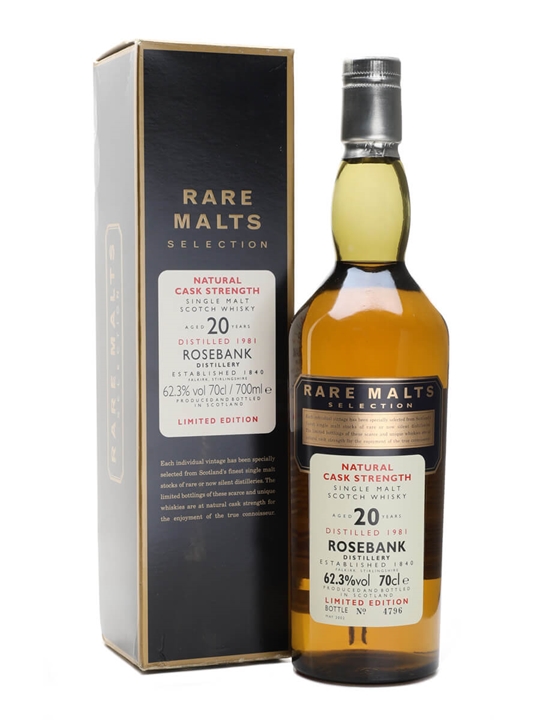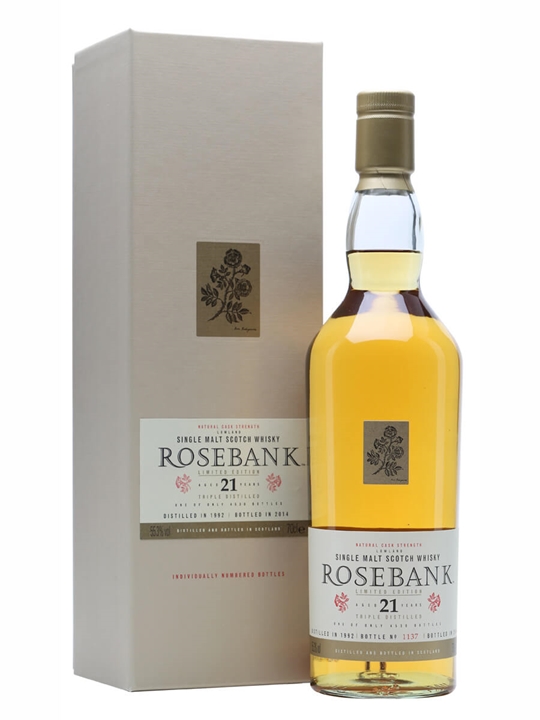

There are bottles you drink, and there are bottles that stop you in your tracks. Rosebank 1992, bottled at 21 years old for Diageo's 2014 Special Releases, is firmly in the latter camp. This is a Lowland single malt from a distillery that fell silent in 1993, making every remaining cask a finite, irreplaceable thing. At 55.3% ABV and carrying a £2,000 price tag, it asks a serious question of the buyer — and, having spent considerable time with this dram, I believe it answers that question convincingly.
A Lowland of Rare Substance
Rosebank has long been regarded as the finest expression of the Lowland style: a triple-distilled malt that married delicacy with genuine complexity. The 1992 vintage, drawn from the distillery's final years of operation, represents that style at full maturity. Twenty-one years in oak at natural cask strength is no small thing — this is a whisky that has had the time to develop real depth without losing the lightness that defines the Lowland character.
At 55.3%, it arrives with authority. This is not a gentle, watered-down nostalgia piece. It's a cask-strength Lowland that demands your attention and rewards your patience. The Special Releases programme has always been Diageo's showcase for exceptional single casks and small batches, and this Rosebank sits comfortably among the most celebrated entries in that series.
Tasting Notes
I won't dress up what isn't there with borrowed language — specific tasting notes for this bottling deserve their own dedicated session, and I intend to revisit this in full. What I will say is that the interplay between the natural cask strength and the Lowland temperament creates something genuinely unusual: a whisky that feels both powerful and poised. There is a tension in the glass that I find deeply compelling.
The Verdict
At £2,000, this is a bottle that prices out casual curiosity, and I won't pretend otherwise. But context matters. Rosebank closed its doors over three decades ago. Every year, fewer casks remain. A 21-year-old official bottling at cask strength, from the 1992 vintage, is not something that can be replicated. You are not paying for liquid alone — you are paying for provenance, scarcity, and the simple fact that they aren't making any more of it.
Is it worth it? If you care about Lowland whisky — truly care about what that tradition produced at its peak — then yes. This is a reference-point dram, a benchmark for what the region was capable of before it was reduced to a handful of working distilleries. I score it 8.5 out of 10: exceptional whisky, historically significant, and a genuinely moving experience in the glass. The half-point held back is a nod to the reality that at this price, perfection is the only fair standard, and perfection is a word I reserve for perhaps three or four bottles I've encountered in fifteen years.
Best Served
Neat, in a tulip-shaped nosing glass, at room temperature. Give it ten minutes to open after pouring. If the cask strength feels assertive, add no more than a few drops of still water — just enough to unlock the mid-palate without drowning the structure. This is not a whisky for cocktails or casual mixing. It deserves your full attention, a quiet room, and absolutely nothing else competing for your senses.