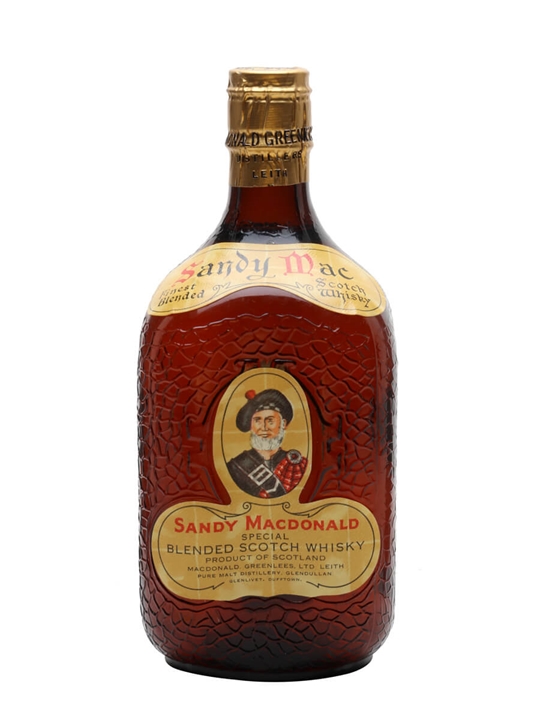

There's something quietly thrilling about handling a bottle that predates decimal currency. The Sandy Macdonald Spring Cap dates to the 1960s — a period when blended Scotch wasn't trying to reinvent itself every quarter with limited editions and influencer tie-ins. It was simply what people drank, and the best of it was made with a confidence that didn't need to shout. At 43% ABV and carrying a price tag of £225, this is firmly in the realm of vintage collecting, but it's also a bottle that rewards actual drinking.
For those unfamiliar with the name, Sandy Macdonald was one of those workmanlike blends that populated the mid-century Scotch landscape — not a prestige marque, not a budget pour, but a solid, respectable blend that reflected the era's commitment to balance and drinkability. The spring cap closure is a helpful dating marker; it places this bottle squarely in the pre-1970s era when screw caps and synthetic closures hadn't yet taken over. That matters, because it tells you something about the liquid inside: this was blended from stocks that were laid down in the 1950s or earlier, when the grain-to-malt ratios and the available cask types were quite different from what we see today.
At 43%, it sits above the minimum bottling strength that would later become standard for many blends, which is a small but meaningful detail. That extra percentage point or two above 40% often translates to better texture and more persistent flavour. Having spent years in the corporate side of this industry, I can tell you that the economics of blending have changed dramatically since this bottle was filled — the pressure to stretch stocks thinner simply wasn't as acute in the 1960s.
Tasting Notes
I won't fabricate specific tasting notes for a bottle of this vintage without doing it proper justice at a formal tasting. What I will say is that 1960s blended Scotch at 43% typically delivers a rounder, more malt-forward character than modern equivalents. Expect a style that's less about sharp grain spirit and more about integration — the kind of blend where the components have had decades in glass to marry further. The spirit of this era tends toward honeyed warmth, gentle smoke, and a waxy richness that modern blending rarely achieves at this price point, or any price point for that matter.
The Verdict
At £225, you're paying for provenance and scarcity as much as liquid quality — and that's perfectly reasonable. This isn't a bottle to agonise over. It's a piece of Scotch history that happens to still be drinkable, and likely very enjoyable at that. The 43% strength is reassuring, suggesting a blend that was made to be tasted rather than merely consumed. For collectors, it's a handsome addition. For drinkers, it's a genuine window into how blended Scotch tasted before the industry's relentless pursuit of efficiency changed the character of the category. I'm giving it a 7.8 — a strong score that reflects the combination of historical interest, solid bottling strength, and the quiet quality that 1960s blends are increasingly recognised for. It loses a point or two simply because the mystery of an unconfirmed distillery source means you're taking this one partly on faith. But faith, in this case, seems well placed.
Best Served
Neat, in a tulip glass, at room temperature. Give it ten minutes after pouring — vintage blends often need a moment to open up after decades in glass. If you're feeling bold, a few drops of water won't hurt, but I'd taste it unadorned first. This is a whisky for a quiet evening with no distractions, not a cocktail component. Treat it with the respect its age demands, but don't be precious about it either — it was made to be drunk, not displayed.