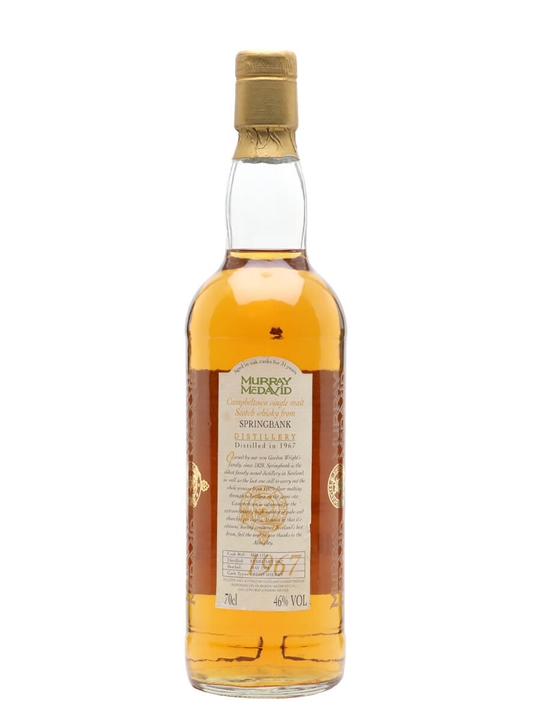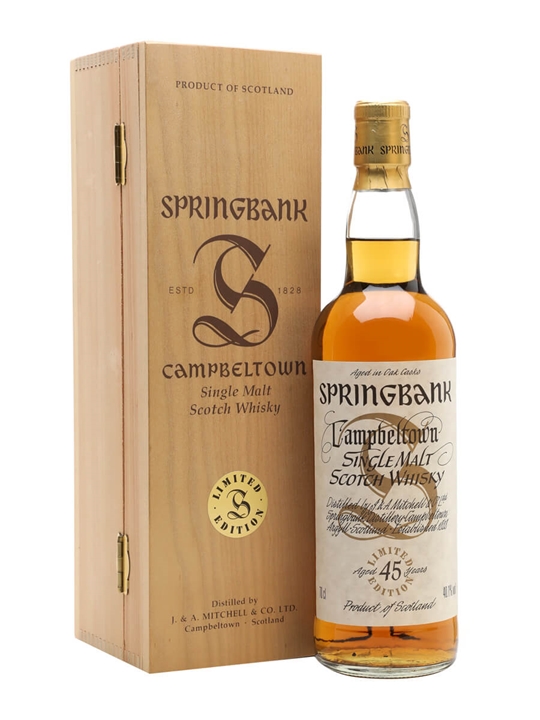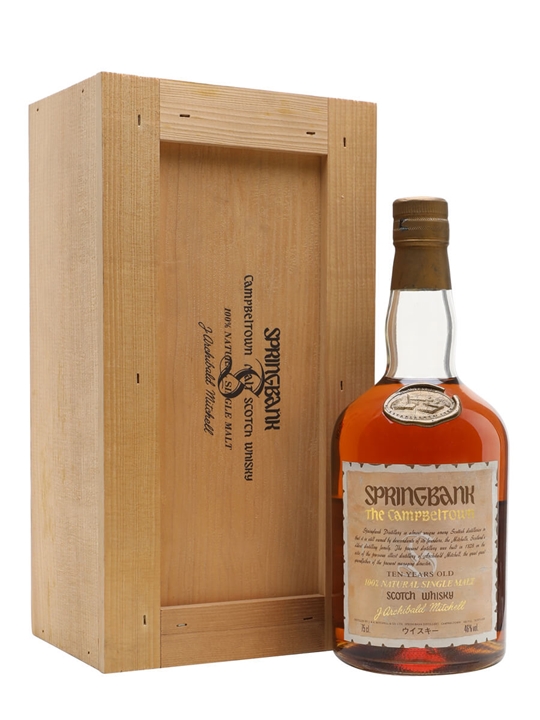

There are bottles you drink, and there are bottles that carry the weight of a place. This Springbank 10 Year Old — the squat, unmistakable dumpy bottle from the 1980s — belongs firmly in the second category. I held it in my hands before I poured it, turning the thing over like an artifact, because that's exactly what it is. Campbeltown once had over thirty distilleries. Now it has three. Springbank is the stubborn survivor, the one that refused to close, and this bottle is a postcard from a time when the town's whisky identity was still quietly reasserting itself after decades of decline.
At 46% ABV and a full ten years of age, this is Springbank as it was — bottled at the strength the distillery believed in, without chill filtration, before the craft whisky movement made those choices fashionable. The dumpy bottle format itself is a collector's touchstone, produced for a relatively brief window and now unmistakable on sight. You don't confuse it with anything else on a shelf. It sits low and broad, like something built to weather a Kintyre gale.
Tasting Notes
I won't pretend to break this down into a clinical dissection of individual notes — this is a bottle from forty years ago, and the experience of drinking it is bigger than any flavour wheel. What I will say is that Campbeltown malts of this era carry a character that's become almost mythic: that coastal, slightly industrial, oily backbone that sets the region apart from both Highland and Islay. This is not a peated bruiser and it's not a delicate Speysider. It lives in the space between, and it owns that space completely. At 46%, the texture is generous without being aggressive. It has the kind of presence that fills a room.
The Verdict
Let's address the elephant: a thousand pounds is a serious sum for a ten-year-old whisky. But this isn't really about age. It's about provenance, scarcity, and what the liquid represents. 1980s Springbank dumpy bottles have become benchmarks for collectors and drinkers who want to understand what Campbeltown tasted like before the modern revival. The distillery's fiercely independent approach — doing everything from malting to bottling on site — was already in full effect when this was made. You're not paying for marketing. You're paying for a time capsule from Scotland's most resilient whisky town.
I've spent enough time walking the harbour at Campbeltown, smelling the salt and malt drifting from the warehouses, to know that this place makes whisky differently. This bottle confirms it. At 7.9 out of 10, it earns its score not through perfection but through sheer authenticity — an honest dram from an honest place, preserved in a format that has become iconic for good reason. It loses a fraction only because, at this price, it's an experience most people will never repeat, and whisky should ultimately be something you can pour without hesitation.
Best Served
Neat, in a wide-bowled glass, with nothing but patience alongside it. Pour it, leave it for ten minutes, and let it open at its own pace. This is an evening dram — after dinner, after the noise has died down, when you can give it the attention it deserves. A few drops of water if you must, but I'd resist. The 46% bottling strength is exactly where Springbank wanted it, and four decades haven't changed that judgment. If you're lucky enough to have this bottle, share it with someone who understands what they're holding.