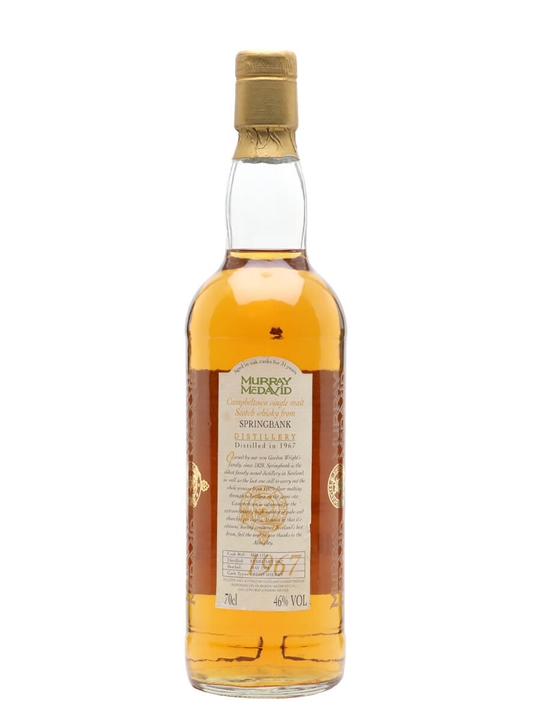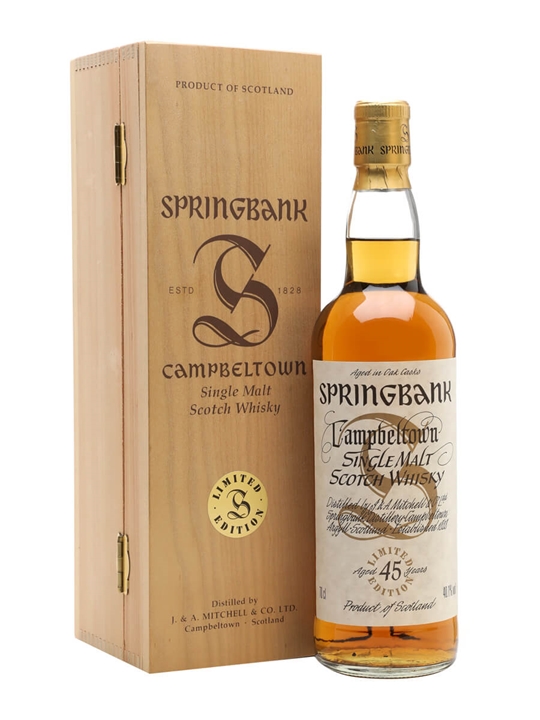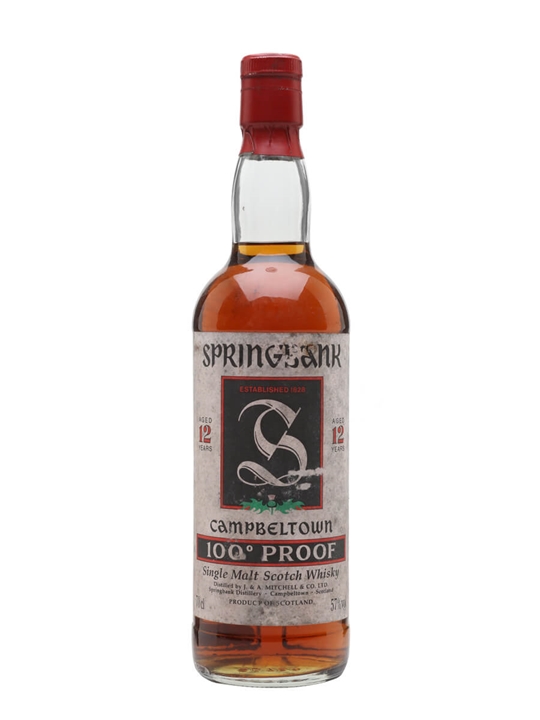

There are bottles you drink, and there are bottles that carry weather inside them. This Springbank 12 Year Old, bottled sometime in the 1990s at a full 100 proof — 57% ABV, the kind of strength that was once simply how whisky arrived — belongs firmly in the latter camp. It landed on my desk with the weight of something that knows exactly what it is, and at £5,000, it demands you know too.
Campbeltown is a place that gets into the glass. I've walked the harbour there on days when the salt wind could strip paint, when the rain came sideways off the Mull of Kintyre and the whole town smelled of brine and malt and diesel. There were once thirty-odd distilleries crammed into those few streets. Now there are three. Springbank is the stubborn heart of what remains — family-owned, floor-malted, doing everything on site from barley to bottle. A 1990s bottling like this one captures a moment in time when Campbeltown whisky was still a connoisseur's secret, before the collectors and the auction houses turned bottles into assets.
What to Expect
At 57% ABV, this is not a whisky that makes concessions. The 100 Proof designation is old-school British proof — a marker of a bottling philosophy that trusted the drinker to handle their spirit undiluted and undiminished. Twelve years in cask at this strength means nothing was sacrificed to bring the ABV down. What went into the barrel is, more or less, what came out, and what came out carries three decades of additional bottle age on top of that original maturation. Time in glass changes things — softens edges, deepens complexity, turns good whisky into something more contemplative.
Campbeltown as a category sits at the crossroads. It is neither the peat-heavy assault of Islay nor the honeyed gentleness of the Highlands. Springbank in particular has always walked its own line — a touch of smoke, a maritime backbone, a waxy richness that is entirely its own dialect. At cask strength, those characteristics arrive with full conviction.
The Verdict
Is it worth £5,000? That depends on what you're buying. If you want twelve-year-old whisky to drink on a Tuesday, obviously not. But this isn't really a bottle of whisky anymore — it's an artefact. A 1990s Springbank at original proof is a snapshot of a distillery and a town and an industry at a particular moment, and those moments don't come back. The liquid inside is almost certainly outstanding; Springbank's track record at this age and strength is remarkably consistent. At 8.4 out of 10, this is a whisky I'd rate with genuine confidence — not perfect, because perfection is a word for people who haven't drunk enough whisky, but very, very good. The price reflects rarity more than quality, but the quality is undeniably there.
Best Served
Neat, in a proper Glencairn, with nothing more than a few drops of cool water added after the first sip — just enough to open the spirit without drowning what three decades have built. Pour it on a night when the wind is up and you have nowhere to be. This is not a social dram. This is a conversation between you and a glass, and the glass has a lot to say.