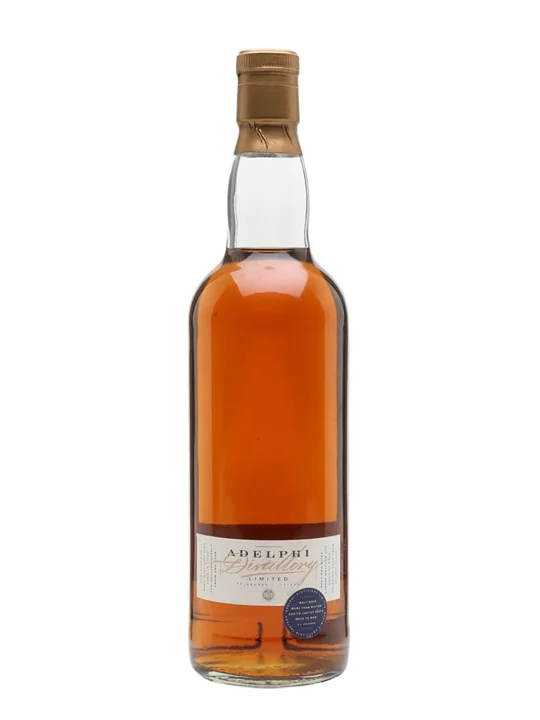

There are bottles you drink and bottles you sit with. The Springbank 1965, bottled in 1993 by Adelphi, is the latter — a whisky that spent nearly three decades in sherry wood before anyone decided it was ready to meet the world. Twenty-eight years of patience distilled into a single cask release at a muscular 53.8% ABV. This is not a whisky that asks for your attention. It assumes it.
Adelphi, in those early 1990s bottlings, had a remarkable knack for selecting casks that told a story about place. And Campbeltown is a place that demands storytelling. This small peninsula town on the Kintyre coast once housed over thirty distilleries. By 1965, when this spirit was laid down, that number had dwindled to a stubborn few. What survived carried the DNA of salt air, damp stone, and a coastal toughness that no amount of sherry maturation can fully tame — nor should it.
At £5,500, this bottle sits firmly in the collector and connoisseur tier. You are not buying a dram here. You are buying a time capsule from a distilling era that no longer exists — mid-1960s production methods, worm tub condensers likely still in play, and a sherry cask that would have been a first-fill European oak puncheon of the kind that has become vanishingly rare. The price reflects scarcity and provenance more than any single sensory quality, though I suspect the sensory qualities hold up their end of the bargain without complaint.
What to Expect
A 1965 Campbeltown malt aged in sherry wood for this length of time should deliver extraordinary depth. The coastal character — that briny, slightly oily backbone that defines the region — will have spent decades negotiating with the dried fruit sweetness and spice of the cask. At 53.8%, this was bottled at natural strength or close to it, which means the spirit retained its full voice. No dilution, no apologies. Expect something that is simultaneously rich and austere, generous but never soft. Campbeltown does not do soft.
The Adelphi bottling philosophy of the era was minimal intervention: no chill filtration, no added colour. What you get in the glass is what the cask gave up. For a whisky of this vintage, that transparency matters enormously.
The Verdict
I give this an 8.1 out of 10, and I want to be clear about what that number means in this context. This is a remarkable piece of whisky history from a region and an era that cannot be replicated. The Adelphi selection pedigree is strong. The cask strength bottling preserves integrity. The sheer age and provenance command respect. I hold back slightly only because the price of entry is ferocious, and at this level, a whisky must justify itself not just as an experience but as an investment in pleasure. For those who can afford it and who understand what a 1960s Campbeltown sherry cask represents, this is a bottle worth crossing oceans for. I have been fortunate enough to taste it, and it lingers — not just on the palate, but in the memory.
Best Served
Neat, in a tulip glass, with nothing but time and silence for company. Add a few drops of cool, soft water after the first nosing — at 53.8%, the spirit will open gradually and reward patience. Do not rush this. Pour small. A dram of 15ml is more than enough to spend an evening with. If you have a fireplace and a rain-streaked window overlooking the sea, so much the better — Campbeltown deserves its weather.