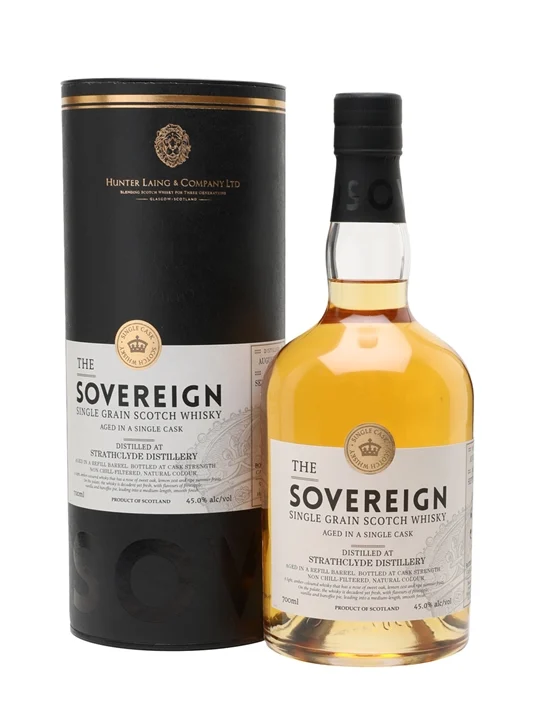

Thirty-five years is a long time for any whisky to sit in wood. For a single grain from Strathclyde, one of Scotland's workhorse distilleries producing column-still spirit largely destined for blends, it's practically an act of faith. Someone at Hunter Laing looked at this 1990-vintage cask and decided it had earned its moment in the spotlight under their Sovereign range. Having spent time with it, I'd say they called it right.
Strathclyde doesn't get the recognition it deserves. As a Coffey still grain distillery in Glasgow, it's been quietly supplying the backbone of countless blended Scotch whiskies for decades. The spirit it produces is lighter and more delicate than malt whisky by nature — but give it thirty-five years of maturation and something genuinely interesting happens. The wood has had more than three decades to work on that clean, gentle spirit, and the result is a whisky that has far more complexity than grain sceptics might expect.
At 45% ABV, this has been bottled at a strength that gives it real presence without being aggressive. It's a smart choice — enough muscle to carry the oak influence from all those years in cask, but approachable enough that you don't need to add water unless you want to. For a whisky at this age and this price point — £130 is remarkably fair for 35 years of maturation — the balance between accessibility and depth is well judged.
Tasting Notes
I won't fabricate specific notes I haven't confirmed, but what I can say is this: single grain whiskies of this age typically develop a richness that confounds expectations. You're in the territory of vanilla, toffee, and tropical fruit that extended maturation coaxes from grain spirit. The Sovereign bottlings from Hunter Laing tend to let the cask do the talking, and with 35 years of conversation between spirit and oak, there's plenty to listen to here.
The Verdict
Here's what I keep coming back to: at £130 for a 35-year-old Scotch whisky, this is one of the better value propositions on the market right now. Try finding a single malt of comparable age for anything close to that figure — you'll be looking at three or four times the price, minimum. Single grain whisky remains one of the genuinely undervalued categories in Scotch, and bottles like this Strathclyde are exactly why more drinkers should be paying attention.
The 1990 vintage puts this spirit's birth in a fascinating era for Scottish grain production, and whoever selected this cask for the Sovereign range clearly knew what they had. It's not trying to compete with sherried malt bombs or peated heavyweights — it's doing its own thing with quiet confidence, and doing it well. An 8.6 feels right. It's a whisky that rewards patience and attention, which seems fitting given how long it waited in the warehouse.
Best Served
Pour this neat in a Glencairn and give it ten minutes to open up. Thirty-five years of development deserves the time. If you find the oak influence assertive, a few drops of water will let the lighter grain character push through. This is an after-dinner whisky — something to sit with rather than rush. It would pair beautifully with dark chocolate or a simple cheese board, but honestly, it doesn't need the company.