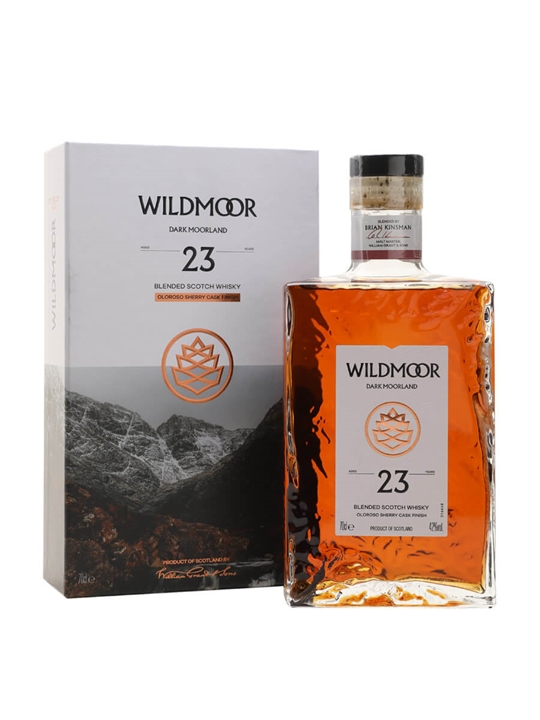

There's a quiet confidence to a 23-year-old blended Scotch that doesn't feel the need to shout about its pedigree. Wildmoor Dark Moorland landed on my desk without the usual fanfare — no breathless press release about 'exceptional casks' or 'master blender's vision' — and honestly, that restraint told me more than any marketing deck could. At £162, it sits in that interesting middle ground: serious enough to demand attention, accessible enough that you won't need to remortgage the flat.
The Wildmoor range has been carving out a niche in the premium blended Scotch space, and Dark Moorland is their age-statement flagship. Twenty-three years is a significant stretch for any whisky, but particularly for a blend, where the economics of holding stock that long are genuinely punishing. Someone at Wildmoor clearly believed this liquid was worth the wait and the warehouse costs. At 42% ABV, they've kept it just above the legal minimum, which for a whisky of this age isn't necessarily a criticism — older blends can become unwieldy at higher strengths, and there's an argument that a gentle bottling strength lets the maturity speak for itself.
Tasting Notes
I won't fabricate specific tasting notes I haven't confirmed — what I will say is that the 'Dark Moorland' descriptor sets clear expectations. This is positioned as the richer, deeper expression in the range, and at 23 years old with that naming convention, you're looking at a whisky that leans into the weight that extended oak contact provides. Blended Scotch at this age typically delivers a complexity that single malts sometimes lack — the art is in the marriage of grain and malt components, and two decades of maturation tends to knit those elements together into something genuinely cohesive.
The Verdict
Here's what I find compelling about Wildmoor 23: the aged blended Scotch category has been neglected for years. The industry spent the last decade chasing single malt premiumisation and NAS releases, leaving a gap for producers willing to invest in mature blends. Wildmoor has walked into that gap with something that, on paper at least, represents reasonable value. Try finding a 23-year-old single malt at £162 — you'll be laughed out of most whisky shops. The blend format gives them flexibility to deliver age and complexity at a price point that would be impossible with malt alone.
I'm giving this an 8.5 out of 10. That score reflects both the quality of what's in the glass and the proposition itself. It's a well-positioned whisky that understands its audience: drinkers who appreciate maturity and craft but aren't interested in paying collectors' prices. The blended Scotch category needs more releases like this — ones that remind people why blends dominated the global market for a century.
Best Served
A whisky with 23 years behind it deserves a bit of ceremony. Pour it neat into a Glencairn, let it sit for five minutes, and give it your full attention for the first few sips. Once you've got the measure of it, a few drops of water will open it up — at 42%, it won't fall apart. This is an after-dinner whisky, full stop. Pair it with dark chocolate or a decent cheese board if you want company, but frankly, it doesn't need the help. Save it for the evenings when you actually want to taste what you're drinking.