There is a story behind every bottle of American, and This Man Changed Whisky Forever (And You’ve Probably Never Heard of Him) carries one worth telling. s saw little reason to tinker with tradition—some might have even called it unnecessary has long occupied a distinctive place in the spirits landscape

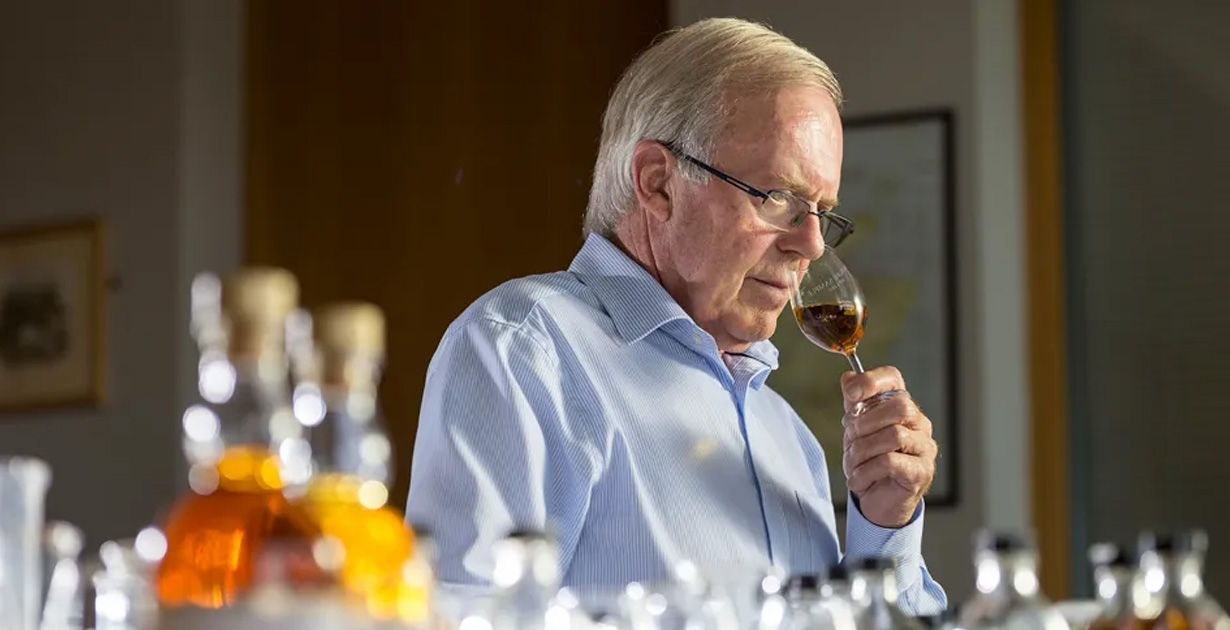
Before the 1980s, the idea of cask finishing after maturation was anything but common. Many distillers saw little reason to tinker with tradition—some might have even called it unnecessary. But David Stewart thought differently.
At William Grant & Sons, for whom he had been working since 1962, Stewart began experimenting with what would become known as cask finishing—a technique that would propel The Balvenie onto the global stage and reshape the whisky industry. More than 40 years later, cask finishing is now a hallmark of whisky production, embraced by distilleries across Scotland and beyond. But how did Stewart develop this technique? What does it do to whisky? And why did it catch on? Let’s explore.
The Balvenie Classic & The Birth Of Cask Finishing
The story of cask finishing begins at The Balvenie Distillery in Speyside, where David Stewart was serving as Malt Master in the 1980s. Intrigued by the idea of pushing the boundaries of scotch whisky making, Stewart began to wonder what would happen if a matured scotch whisky was reracked into a different cask. This was virtually unheard of at the time – most scotch whisky was matured either in ex-bourbon or ex-sherry. However, in the 1980s, sherry casks were becoming harder and more costly to obtain.
“We were already using American and European oak casks, but I wondered how it would turn out if we just re-casked some American oak-matured whisky into Sherry butts,” he told ScotchWhisky.com.
 Must Read Stories
The Phoenix of Islay: How Port Ellen Came Back From The Dead

5 Great Wheated Bourbons You Can Actually Find

Two Centuries in the Valley of Brambles: Celebrating 200 Years of The Glendronach

The Prohibition Era Van Winkle That Predates Pappy

The Rye Whiskey That Fuelled New York’s Speakeasies

The Most Anticipated Whiskies of 2026: A Collector’s Preview

Laphroaig: The Ultimate Bonfire Night Whisky

The Ultimate Christmas Day Whisky Pairing Guide: From Welcome Dram to Fireside Sip

Love It or Hate It: The Uncompromising 200 Year Story of Laphroaig

The Lost Labels of Johnnie Walker: Discontinued Expressions You Can’t Buy Anymore
And that is exactly what Stewart did with the launch of The Balvenie Classic in 1983. The innovative scotch whisky was initially matured in American oak ex-bourbon casks. before being finished in Oloroso sherry casks. It is widely considered to be one of if not the first whisky to undergo secondary maturation, or as it would become known, finishing.

The technique was wildly successful – showcasing how a cask finish can enhance the existing profile of a whisky – and set the stage for The Balvenie’s exploration into other cask finishes. The Balvenie Classic was rebranded in 1993 as The Balvenie Double Wood.
Since then, the distillery has launched numerous cask-finished whiskies including The Balvenie Caribbean Cask 14 Year Old, The Balvenie French Oak 16 Year Old, and The Balvenie PortWood 21 Year Old (launched in 1996).
The Wider Impact On The Scotch Whisky Industry
In the wake of The Balvenie Classic’s release, other scotch whisky producers began to sit up and take note. In 1987, Glenmorangie released a 1963 vintage that had been finished in Oloroso sherry casks for 18 months.
Glenmorangie continued its foray into cask finishing in the 1990s with bottles such as the Glenmorangie Port Wood Finish (1994), followed by a sherry finish and a Madeira finish (1996).
Other distilleries soon followed suit. Bowmore, for example, launched a successful range of cask-finished whiskies in the 1990s that included Bowmore Claret, Dusk, and Voyage. Also in the 1990s, with the help of the man himself, David Stewart, who served as Malt Master for William Grant & Sons, Glenfiddich unveiled the 15 Year Old Solera Reserve.

Soon, the whole scotch whisky industry was experimenting with cask finishes, a practice that is now widespread and has changed the face of whisky forever.
Thank You, David Stewart MBE
In short, David Stewart – who was awarded an MBE in 2016 for his contributions to the scotch whisky industry – completely changed the industry with his pioneering cask finishing process. Many scotch whisky drinkers would undoubtedly not have their favorite expressions today if it weren’t for Stewart’s rampant curiosity and penchant for exploration.
Must Read StoriesThe Phoenix of Islay: How Port Ellen Came Back From The Dead
5 Great Wheated Bourbons You Can Actually Find
Two Centuries in the Valley of Brambles: Celebrating 200 Years of The Glendronach
The Prohibition Era Van Winkle That Predates Pappy
The Rye Whiskey That Fuelled New York’s Speakeasies
The Most Anticipated Whiskies of 2026: A Collector’s Preview
Laphroaig: The Ultimate Bonfire Night Whisky
The Ultimate Christmas Day Whisky Pairing Guide: From Welcome Dram to Fireside Sip
Love It or Hate It: The Uncompromising 200 Year Story of Laphroaig
The Lost Labels of Johnnie Walker: Discontinued Expressions You Can’t Buy Anymore
Final Reflections
This Man Changed Whisky Forever (And You’ve Probably Never Heard of Him) is the kind of bottle that rewards the curious — those willing to sit with a glass and let the story unfold at its own pace.