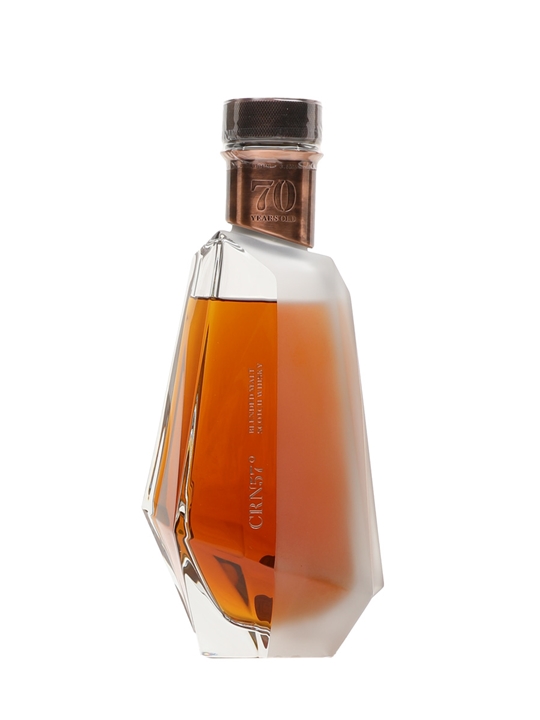

Seventy years. Let that settle for a moment. When the spirit that became CRN57° 70 Year Old Blended Malt was first laid into cask, rationing was still in force, television was a novelty, and the Scotch whisky industry looked nothing like the global commodity machine it is today. That this liquid survived seven decades in oak — and emerged at a bottling strength of 45.2% — is remarkable in itself. Cask losses over that span are punishing; angel's share alone would have claimed the majority of what went in. What remains is, by definition, extraordinary.
CRN57° is a name I've seen surface in collector and auction circles over the past year, positioning itself squarely in the ultra-aged luxury segment that has exploded since the late 2010s. The brand keeps its cards close — no confirmed distillery source, which in this bracket either means a carefully guarded single-source arrangement or a vatting from undisclosed Highland or Speyside stock. Either way, for a blended malt of this age, we're talking about component whiskies that have spent longer in wood than most distillery workers have been alive.
What to Expect
At 70 years old, the character of the original distillate has long since been overtaken by the cask. You should expect deep, concentrated oak influence — dried tropical fruits compressed into something almost resinous, old leather, furniture polish in the best possible sense, and that unmistakable waxy quality that extreme age tends to produce. The 45.2% ABV is genuinely encouraging here. Too many ultra-aged bottlings arrive at cask strength numbers in the high 30s or low 40s, where the whisky can feel thin and overly tannic. That this has held above 45% suggests either exceptional cask selection or careful management — possibly both. It should carry enough weight to deliver flavour without collapsing into pure wood extract.
Blended malt as a category deserves more respect than it typically receives, and at this age statement, it arguably offers something single malts cannot: the opportunity to marry components that have aged differently, balancing one cask's intensity against another's elegance. Done well, the result is greater complexity than any single cask could achieve alone.
The Verdict
At £6,900, this is not an impulse purchase. But context matters. Comparable single malts at 50 or 60 years old from named distilleries routinely command five figures, and anything approaching 70 years is essentially priceless at auction. By the standards of ultra-aged Scotch, the CRN57° is — and I say this with full awareness of how absurd it sounds — relatively accessible. The question is whether you're buying to drink or to display, and I'd argue the ABV here actively invites the former. This is bottled at a strength meant to be experienced, not merely admired through glass. I'm giving it 8.5 out of 10: a score that reflects both the genuine rarity of what's in the bottle and the honest reality that without confirmed provenance, there's a small leap of faith involved. For collectors who understand the segment and appreciate what seven decades of maturation actually means, this is a serious piece of Scotch whisky history.
Best Served
Neat, at room temperature, in a tulip glass — and give it twenty minutes to open after pouring. Whisky this old needs air and patience. A few drops of still water may unlock additional layers, but add them one at a time. There's no rush. This bottle has waited seventy years; you can wait a quarter of an hour.